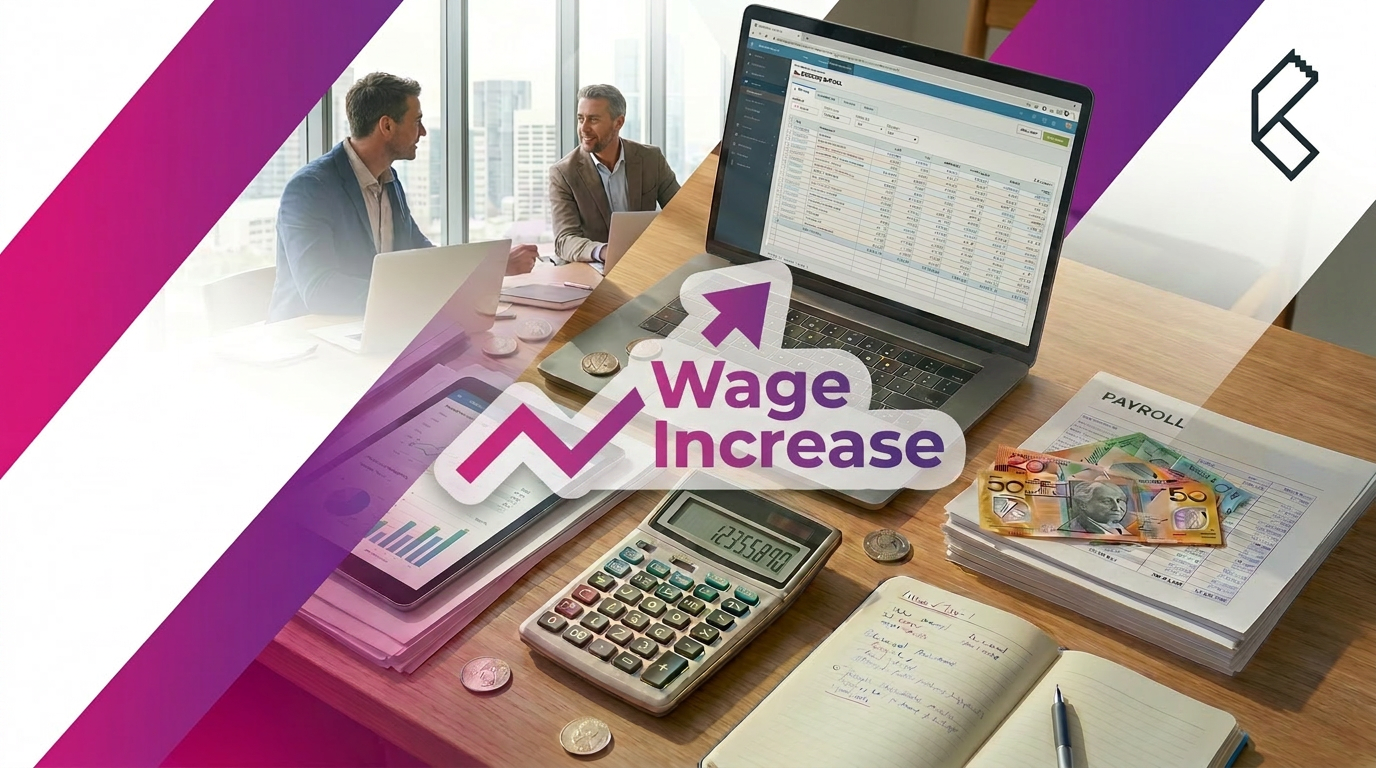
2026 wage increase Australia changes take effect on 1 July 2026, bringing higher labor costs and new planning considerations for businesses across the country. Following the Fair Work Commission’s Annual Wage Review, employers need to prepare higher wage costs, payroll updates, and potential impacts on profitability.
For many small and medium-sized businesses, this increase comes at a time when operating costs remain high; cash flow is under pressure, and compliance obligations continue to grow. While wage increases are designed to support workers facing cost-of-living challenges, they also require careful planning from employers.
The good news? Businesses that act early can minimize disruption and maintain confidence in their financial position through accurate bookkeeping, payroll management, and timely financial reporting.
What Has Changed?
The Fair Work Commission has announced a 4.75% increase to minimum award wages and an increase of almost 6% to the National Minimum Wage, effective from 1 July 2026.
This means employers covered by modern awards will need to ensure their payroll systems; employment contracts and wage calculations reflect the new rates from the start of the new financial year.
While the increase may appear modest on paper, the flow-on effect can be significant when applied across multiple employees, overtime calculations, leave loading, superannuation and payroll tax obligations.
For businesses with growing teams, the cumulative impact can quickly add thousands of dollars to annual employment costs.
2026 Wage Increase Australia and Its Impact on Business Costs
The 2026 wage increase Australia decision is about more than simply adjusting hourly rates.
Many business owners focus on wages alone and overlook the additional employment costs that rise alongside them. These can include:
- Superannuation contributions
- Workers’ compensation premiums
- Leave accruals
- Payroll tax obligations
- Overtime and penalty rates
- Training and onboarding expenses
For example, a wage increase applied across a workforce of 20 employees may have a far greater impact on annual labour costs than expected.
This is why businesses should review their financial forecasts before the changes take effect.
Having accurate bookkeeping and up-to-date management reports can make it much easier to understand how these changes will affect profitability and cash flow.
Why Cash Flow Planning Matters More Than Ever
One of the biggest mistakes businesses make is assuming they can absorb wage increases without adjusting their financial plans.
Labour costs are often one of the largest expenses on a profit and loss statement. When wages increase, margins can quickly shrink if revenue does not keep pace. Business owners should consider:
- Reviewing pricing strategies
- Evaluating workforce productivity
- Forecasting labour costs for the next 12 months
- Monitoring gross profit margins
- Updating cash flow forecasts
Businesses that already monitor cash flow closely will be in a much stronger position to absorb rising labour costs without impacting day-to-day operations.
At iKeep, we regularly help business owners understand the relationship between payroll expenses, profitability and cash flow through accurate bookkeeping and reporting.
Payroll Compliance Is Critical
Wage increases also create compliance risks. Even small payroll errors can lead to underpayments, employee disputes and potential penalties. Now is an ideal time to review:
- Award classifications
- Employees pay rates
- Payroll software settings
- Overtime calculations
- Salary packaging arrangements
- Employment contracts
With the introduction of Payday Super approaching, many employers are already reviewing their payroll systems to ensure compliance with changing obligations.
Businesses relying on manual payroll processes may find these reviews particularly challenging.
A professional payroll review can help identify potential issues before they become expensive.
With increasing scrutiny around wage compliance in Australia, ensuring payroll accuracy has become a critical business responsibility rather than simply an administrative task.
What Employers Should Do Before 1 July
To prepare for the new wage rates, employers should take the following steps:
- Review Employee Classifications – Confirm that employees are correctly classified under the relevant award or employment agreement.
- Update Payroll Systems – Ensure payroll software reflects the new wage rates from 1 July.
- Review Budgets and Forecasts – Adjust labour cost projections for the new financial year.
- Assess Pricing – Determine whether pricing adjustments may be necessary to protect margins.
- Communicate with Managers – Ensure leadership teams understand the financial impact and support workforce planning decisions.
- Seek Professional Advice – Complex payroll and compliance matter often benefit from specialist support.
Turning Compliance into a Competitive Advantage
Many business owners see wage increases purely as an added cost.
However, the businesses that navigate these changes most successfully often use them as an opportunity to strengthen financial processes, improve reporting, and gain greater visibility over business performance.
Understanding labor costs in real time allows business owners to make smarter decisions about hiring, pricing, and growth.
This is where accurate bookkeeping, payroll management, and timely financial reporting become valuable strategic tools rather than simple compliance requirements.
Final Thoughts
The 2026 wage increase will affect businesses across Australia, but preparation is the key to managing the impact successfully.
By reviewing payroll systems, updating financial forecasts and ensuring compliance obligations are met, employers can avoid surprises and maintain confidence in their business performance. With the new financial year approaching, now is also a good time to revisit your EOFY preparation and broader compliance obligations.
If you’re unsure how the wage increase will affect your business, now is the time to review your numbers.
At iKeep, our bookkeeping, payroll and management reporting services help Australian businesses stay compliant, improve visibility and make informed financial decisions with confidence.