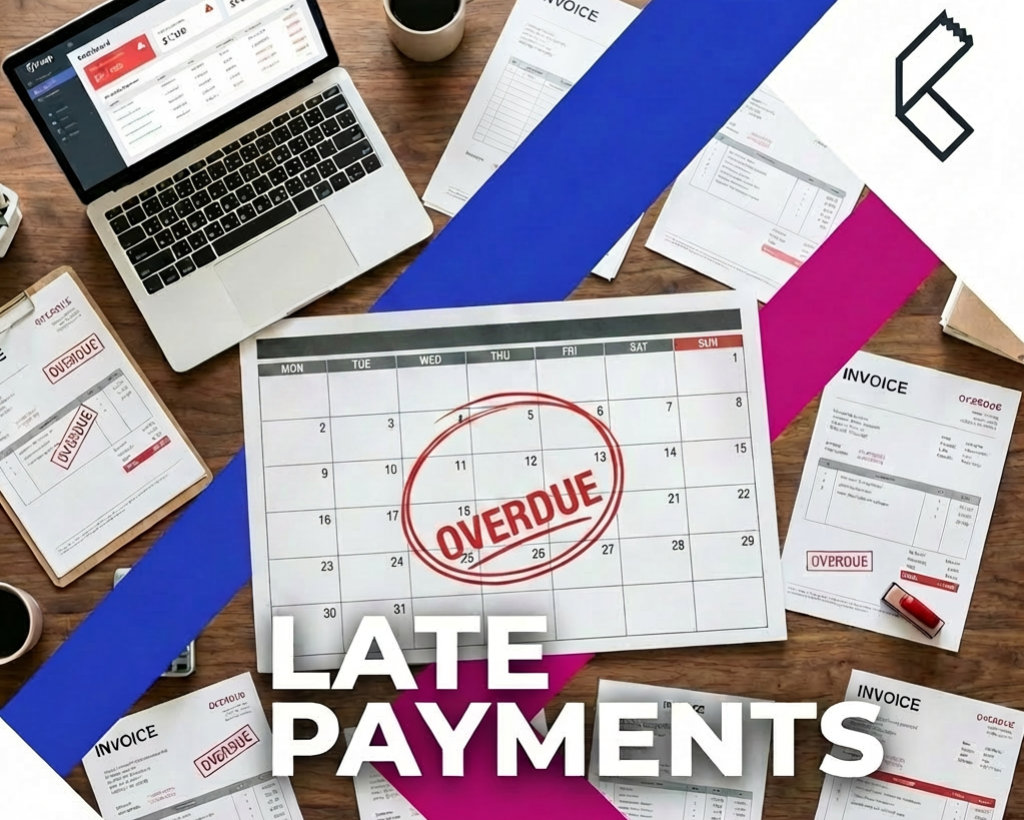
Late payments are worsening across Australia’s small business sector, and in early 2026 the impact is being felt more sharply than ever. Recent industry surveys show many small business owners are waiting weeks—and in some cases months—beyond invoice due dates to be paid. A growing number report that payment delays are now worse than they were a year ago.
While late payments have always been frustrating, they have now become a serious operational and compliance risk. Rising operating costs, interest rate increases, and new obligations such as Payday Super mean small businesses have far less room to absorb delayed income. What was once an inconvenience is increasingly undermining cash flow stability, payroll obligations, and growth plans.
Late payments are worsening — what’s driving the problem?
Several factors are contributing to the escalation of late payments across small businesses:
- Customers are managing their own cash flow pressures and delaying payments
- Larger organisations continue to impose long payment terms on small suppliers
- Invoicing and follow‑up processes remain manual or inconsistent
- Businesses hesitate to chase payments out of concern for client relationships
At the same time, money is flowing out of businesses faster. Wages, superannuation, energy costs, and supplier prices have all increased. This means even short payment delays can place immediate strain on day‑to‑day operations.
Late payments no longer exist in isolation—they compound other financial pressures already affecting small businesses.
Why late payments matter more now than ever
In 2026, the consequences of late payments are increasingly serious. Many small businesses are finding that delayed customer receipts directly affect their ability to meet fixed obligations on time.
Late payments are now linked to:
- Cash flow shortfalls that require owners to dip into personal funds
- Increased reliance on overdrafts, credit cards, or short‑term borrowing
- Difficulty meeting payroll and superannuation deadlines
- Higher risk of falling behind on BAS, PAYG, or tax payments
With Payday Super commencing in July 2026, this risk becomes even greater. Superannuation will need to be paid with every pay cycle, regardless of whether customer invoices have been settled. For businesses already struggling with late payments, this creates a dangerous cash flow mismatch.
The hidden cost of chasing overdue invoices
Late payments don’t just hurt financially—they also consume time, energy, and focus. Many business owners spend hours each week chasing outstanding invoices, following up emails, and having uncomfortable conversations about money.
This lost time:
- Reduces capacity to focus on sales, strategy, and service delivery
- Creates stress for business owners and administrative staff
- Delays decision‑making due to uncertainty around incoming cash
Over time, this administrative burden becomes another invisible cost eating into profitability and sustainability.
Protecting cash flow when payments are delayed
While businesses can’t always control when customers pay, they can take steps to reduce risk and improve cash flow certainty.
Clear and consistent invoicing processes are critical. This includes accurate invoice details, clear due dates, and agreed payment terms upfront. Many businesses benefit from tightening terms, particularly where long delays have become routine.
Improving visibility over incoming and outgoing cash also makes a significant difference. When business owners understand exactly what is owed, when it is due, and what expenses are coming up, they are better positioned to plan for shortfalls and avoid surprises.
At iKeep, we often see that businesses with regular cash flow reporting and forecasting feel far more confident—even when payments are delayed—because they have clarity and control.
Reducing reliance on borrowing
One of the biggest impacts of worsening late payments is the need to rely on borrowed funds to cover everyday expenses. Interest rate increases in early 2026 mean this borrowing is becoming more expensive, further squeezing margins.
Regular cash flow forecasting allows business owners to anticipate gaps early and take action before borrowing becomes the only option. This might include adjusting payment terms, renegotiating supplier arrangements, or revisiting pricing and deposit structures.
Strategic bookkeeping and advisory support play a key role here by helping translate raw financial data into meaningful insights and decisions.
The role of accurate bookkeeping in managing late payments
Up‑to‑date bookkeeping is essential when late payments are an ongoing issue. Without accurate records, it becomes difficult to know what is overdue, how long payments have been outstanding, and how delays affect overall financial health.
Strong bookkeeping supports:
- Clear accounts receivable tracking
- Faster identification of high‑risk customers
- Accurate cash flow and profitability reporting
- Confident compliance with ATO obligations
At iKeep, we help clients use tools like Xero to gain real‑time visibility over receivables, cash flow, and upcoming commitments—reducing uncertainty and helping businesses stay proactive rather than reactive.
Why late payments can stall growth
Beyond day‑to‑day stress, late payments often force businesses to delay growth decisions. Hiring staff, investing in systems, expanding services, or taking on new opportunities all require confidence in cash flow.
When payments are unpredictable, businesses tend to shift into survival mode—focused on covering immediate obligations rather than planning ahead. Over time, this can limit growth potential and contribute to burnout.
Solving late payment challenges isn’t just about cash—it’s about creating space for the business to move forward confidently.
How iKeep helps businesses regain control
iKeep works with Australian small business owners to help them manage late payments without losing visibility or confidence. Through our bookkeeping, payroll, BAS, and advisory services, we support businesses in:
- Improving cash flow clarity and forecasting
- Strengthening receivables tracking and reporting
- Staying compliant with payroll and super obligations
- Making informed decisions even in uncertain conditions
Our focus is not just on reporting what has happened, but on helping business owners understand what their numbers mean—and what to do next.
Final thoughts
Late payments are worsening, and in 2026 they represent one of the biggest risks facing small businesses. While delayed customer payments may be outside your direct control, how you manage their impact is not.
With the right systems, visibility, and support, businesses can protect cash flow, meet compliance obligations, and continue to plan for growth—despite ongoing payment delays.
If you’d like help bringing clarity to your cash flow and receivables, the iKeep team is here to help.