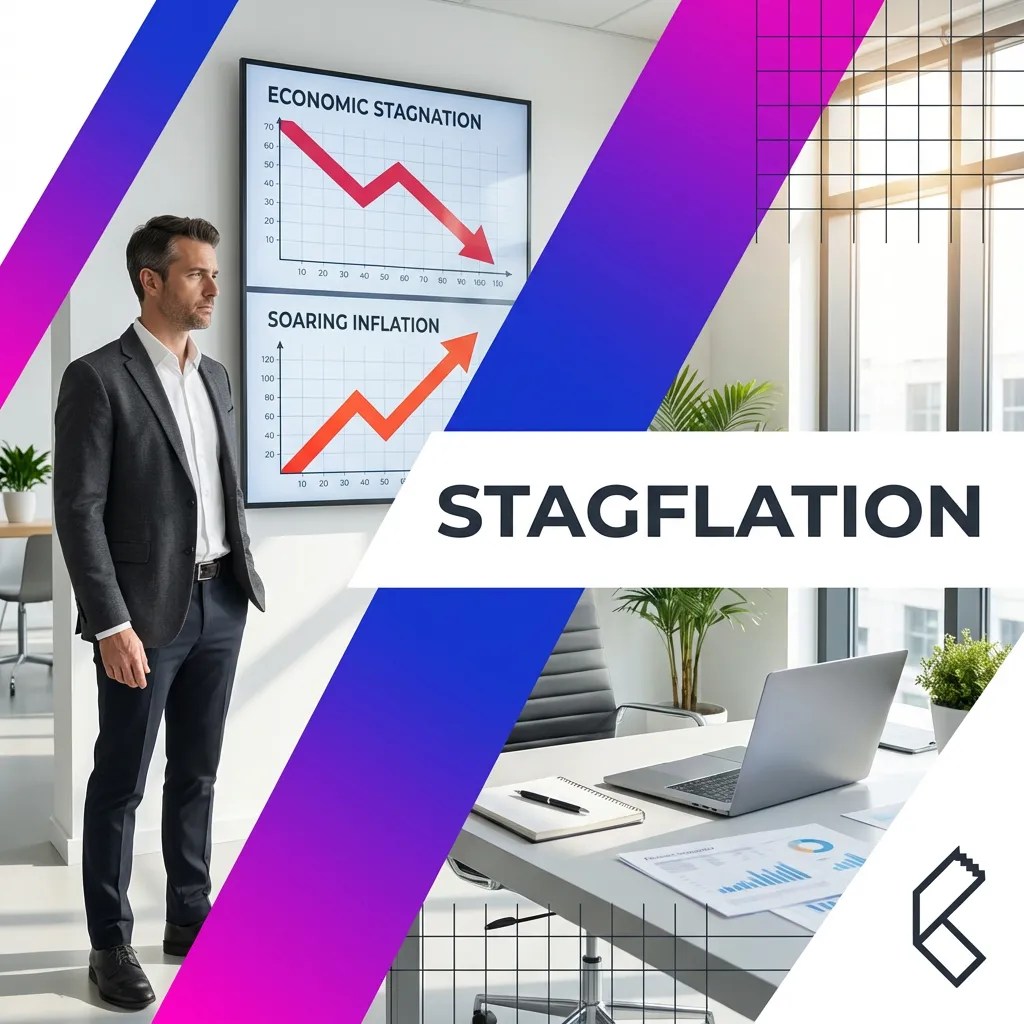
Stagflation risk for Australian businesses is becoming increasingly real as inflation pressures return, interest rates stay elevated, and business confidence falls to its lowest point since 2020.
As of April 2026, Australian businesses are facing a challenging economic landscape shaped by global geopolitical shocks, supply chain disruptions, and ongoing cost pressures. At the same time, economic growth is slowing, customers are becoming more cautious with spending, and access to finance remains expensive.
This environment creates what economists call stagflation—a rare but difficult condition where rising costs collide with sluggish growth. For Australian small and medium‑sized businesses, this combination places pressure on cash flow, profitability, and strategic decision‑making.
Understanding the risks—and responding early—can make the difference between simply surviving the next phase of the cycle and building long‑term resilience.
Stagflation Risk for Australian Businesses: What Does Stagflation Actually Mean?
Stagflation occurs when three economic forces hit at the same time:
- High or persistent inflation, increasing wages, rent, utilities, insurance, and supplier costs
- Low or slowing economic growth, reducing demand and sales volume
- Weak business confidence, delaying investment, hiring, and expansion decisions
Unlike a typical downturn, stagflation limits the effectiveness of interest rate cuts as a stimulus because inflation remains a concern. For business owners, that often means tighter margins, more conservative lending conditions, and fewer easy levers to pull.
This makes financial clarity and control more important than ever.
Why Stagflation Risk Matters for Australian SMEs Right Now
Many Australian businesses are already feeling the strain:
- Interest rate increases have raised loan repayments and overdraft costs
- Supplier price rises are squeezing margins, particularly in service businesses
- Customers are taking longer to pay or pushing back on price increases
- Forecasting has become more difficult due to uncertain sales pipelines
At the same time, compliance obligations don’t pause. BAS deadlines, payroll reporting, superannuation, and Single Touch Payroll continue regardless of economic conditions.
Without accurate, up‑to‑date financial data, these combined pressures can quickly overwhelm even well‑run businesses.
Practical Steps to Manage Stagflation Risk for Australian Businesses
- Prioritise cash flow visibility
In a stagflationary environment, cash flow becomes the single most important metric.
Actionable steps:
- Invoice promptly and reduce payment terms where possible
- Follow up on overdue accounts consistently and professionally
- Maintain a rolling cash flow forecast covering the next 6–12 months
Many iKeep clients use cash flow forecasting and reporting to identify pressure points early and plan accordingly, instead of reacting when funds are already tight.
- Reassess pricing and profitability
Rising costs cannot always be absorbed indefinitely.
Actionable steps:
- Review pricing against increased input costs
- Identify low‑margin services or clients that consume disproportionate time
- Monitor gross margins monthly, not annually
With accurate bookkeeping and management reports, business owners gain clear insight into which parts of the business are profitable—and which may need adjustment.
- Strengthen financial discipline and compliance
Economic uncertainty often exposes weak processes.
Actionable steps:
- Keep bank, loan, and credit card reconciliations up to date
- Ensure BAS, payroll, and superannuation are lodged accurately and on time
- Avoid last‑minute compliance stress, which increases risk and errors
iKeep’s BAS and payroll services help businesses stay compliant and organised, even when owners are juggling multiple competing priorities.
- Plan conservatively, but keep planning
Uncertainty should refine planning, not stop it altogether.
Actionable steps:
- Run “what‑if” scenarios for slower sales or higher costs
- Stress‑test your cash position under conservative assumptions
- Delay non‑essential spend, but protect core systems and staff
iKeep’s business advisory services help translate financial data into realistic scenarios, supporting decisions grounded in evidence rather than anxiety.
- Communicate early with advisors and lenders
Silence during downturns increases risk.
Actionable steps:
- Speak early with your bookkeeper or advisor about emerging challenges
- Keep lenders informed if conditions tighten
- Ensure financial records are clean and current if renegotiation is required
Businesses that maintain open communication typically have more flexibility and better outcomes.
Turning Stagflation Risk into a Strategic Advantage
While stagflation creates pressure, it also highlights which businesses are operationally strong. Those with:
- Reliable financial data
- Consistent cash flow monitoring
- Strong compliance foundations
- Access to proactive advisory support
tend to weather volatility better—and are well positioned when conditions stabilise.
Periods like this reward clarity, discipline, and informed decision‑making.
How iKeep Supports Australian Businesses Through Economic Uncertainty
iKeep works alongside Australian businesses to provide:
- ✅ Cloud‑based bookkeeping and reconciliations
- ✅ Cash flow forecasting and reporting
- ✅ BAS and payroll compliance support
- ✅ Management reporting for better decision‑making
- ✅ Practical business advisory services
Our approach is designed to give business owners clarity, confidence, and control, even in uncertain economic conditions.
Final Thoughts
Stagflation risk for Australian businesses in April 2026 presents real challenges—but it also reinforces the importance of strong financial foundations. Businesses that act early, manage cash carefully, and seek the right support are far better placed to navigate the months ahead and position themselves for future growth.
If you’re unsure how current conditions impact your business, iKeep can help you gain clarity and build resilience.