
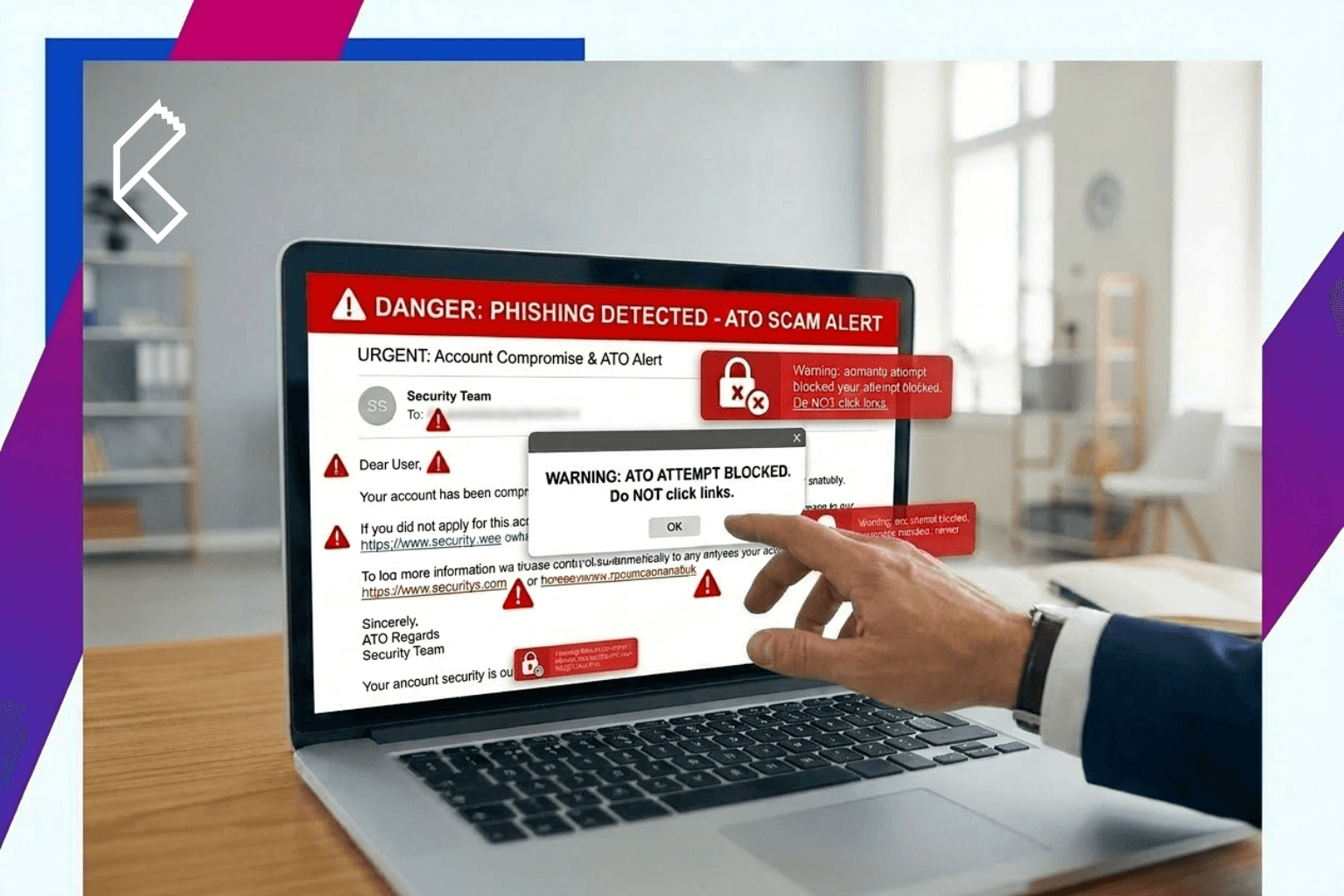
ATO impersonation scam activity increases sharply during tax time—and 2026 is no exception.
With EOFY approaching, scammers are becoming more targeted and more convincing, using emails, SMS messages, and phone calls that appear to come directly from the ATO or myGov.
Recent alerts include:
- A fake cryptocurrency declaration email pressuring recipients to act immediately
- A DocuSign-style “notice of assessment” scam linking to a fake myGov login page
Once access is gained, scammers can:
- Steal tax refunds
- Access your myGov account
- Redirect superannuation or business payments
- Use your identity for further fraud
For business owners, this isn’t just inconvenient—it’s a real financial risk.
Why EOFY is peak scam season
Scammers follow behavior—and EOFY is when businesses are most vulnerable.
During this time:
- Tax returns are being finalized
- ATO communications increase
- Refunds and payments are expected
This creates the perfect environment for scams to blend in with legitimate messages.
EOFY is widely recognized as a prime period for scams, especially impersonation of government agencies like the ATO.
Simply put: the more you expect legitimate messages, the easier it is for a fake one to slip through.
What the ATO will never do
Understanding how the ATO actually communicates is one of your strongest protections.
The ATO will never:
- Send unsolicited emails or SMS with links asking you to log in
- Ask for personal or financial details via email or text
- Threaten arrest, legal action, or immediate penalties
- Request payment via gift cards or cryptocurrency
- Ask you to disclose assets via an unexpected message
If a message includes any of these, treat it as a scam—no exceptions.