
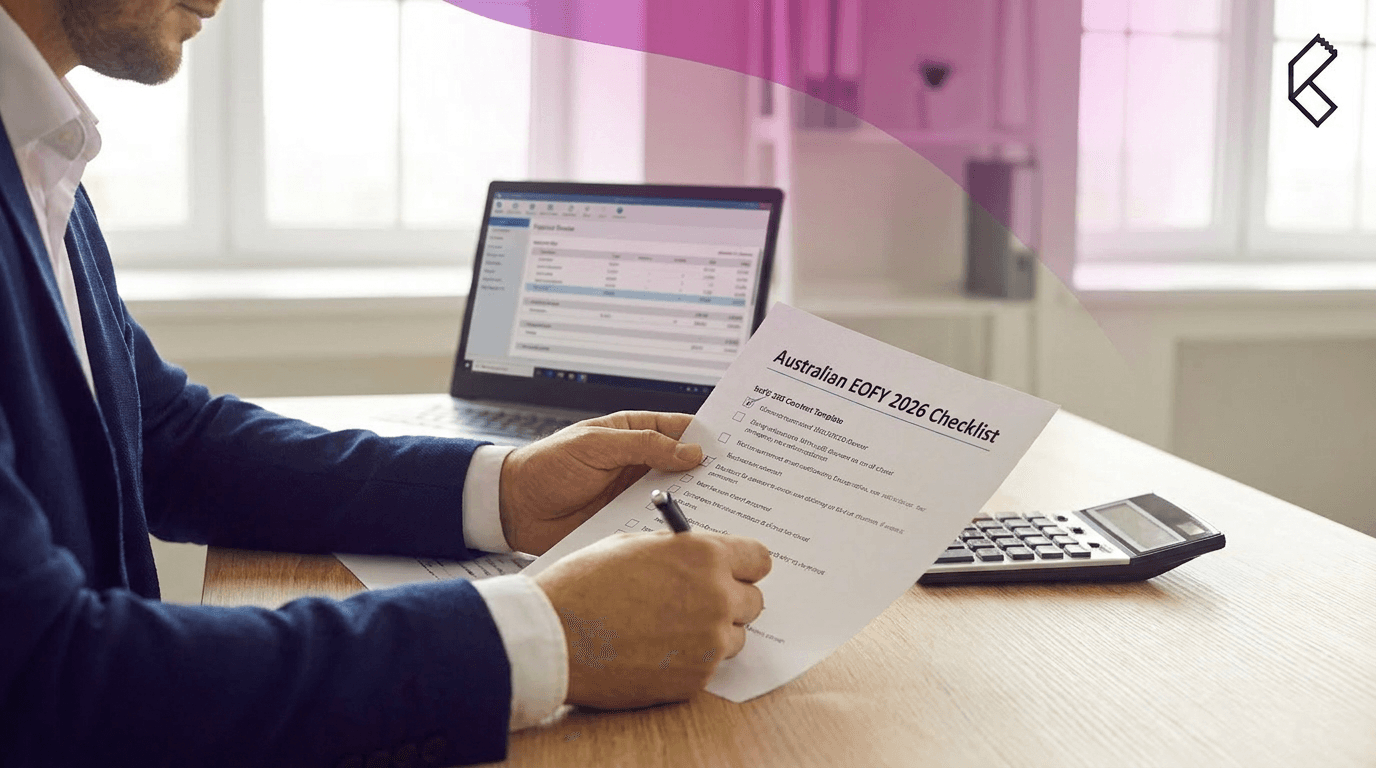
EOFY 2026 record keeping has become one of the most important business priorities for Australian SMEs in 2026. As the Australian Taxation Office (ATO) steps up efforts to recover more than $50 billion in unpaid tax, businesses with incomplete records, unreconciled accounts, or omitted income are increasingly finding themselves under the spotlight.
The days of sorting through a shoebox full of receipts at tax time are long gone. With the ATO now receiving real-time payroll data through Single Touch Payroll (STP) and using increasingly sophisticated data-matching technology, the gap between a missed obligation and an ATO notification has shrunk dramatically.
For business owners, EOFY isn’t just about lodging tax returns. It’s about protecting your business, reducing compliance risks, and ensuring you’re prepared if the ATO ever asks questions.��
EOFY Record Keeping: Your First Line of Defense
Good record keeping is often viewed as an administrative burden, but in reality, it’s one of the strongest forms of risk management available to small businesses.
Accurate records help you:
- Meet your tax obligations confidently
- Support deductions and GST claims
- Track business performance
- Improve cash flow management
- Reduce the likelihood of ATO reviews or audits
- Make better financial decisions throughout the year
Poor record keeping, on the other hand, can result in penalties, interest charges, denied deductions, and unnecessary stress during tax season.
The good news is that a few simple EOFY habits can significantly improve your compliance position.
EOFY Checklist for Australian SMEs
As 30 June approaches, consider working through the following checklist.
- Move Away from Paper Records
If your business still relies on paper receipts, manual spreadsheets, or scattered records, now is the time to digitize. Cloud-based bookkeeping systems make it easier to:
- Store records securely
- Capture receipts instantly
- Access financial information from anywhere
- Prepare BAS and tax reporting more efficiently
Digital records also make it much easier to respond quickly if the ATO requests supporting documentation.
- Reconcile Your Accounts Before 30 June
One of the most common EOFY issues is unreconciled bank accounts. Before year-end, ensure that:
- Bank accounts are reconciled
- Credit card transactions are matched correctly
- Loan balances are updated
- Outstanding invoices are reviewed
- Payroll records align with accounting records
Regular reconciliation helps identify errors early and prevents surprises during tax preparation.